Art Through Three Decades Banner

Art Through Three Decades

Celebrating art through the decades…
1920s/ 1930s / 1940s 

Exhibition content image
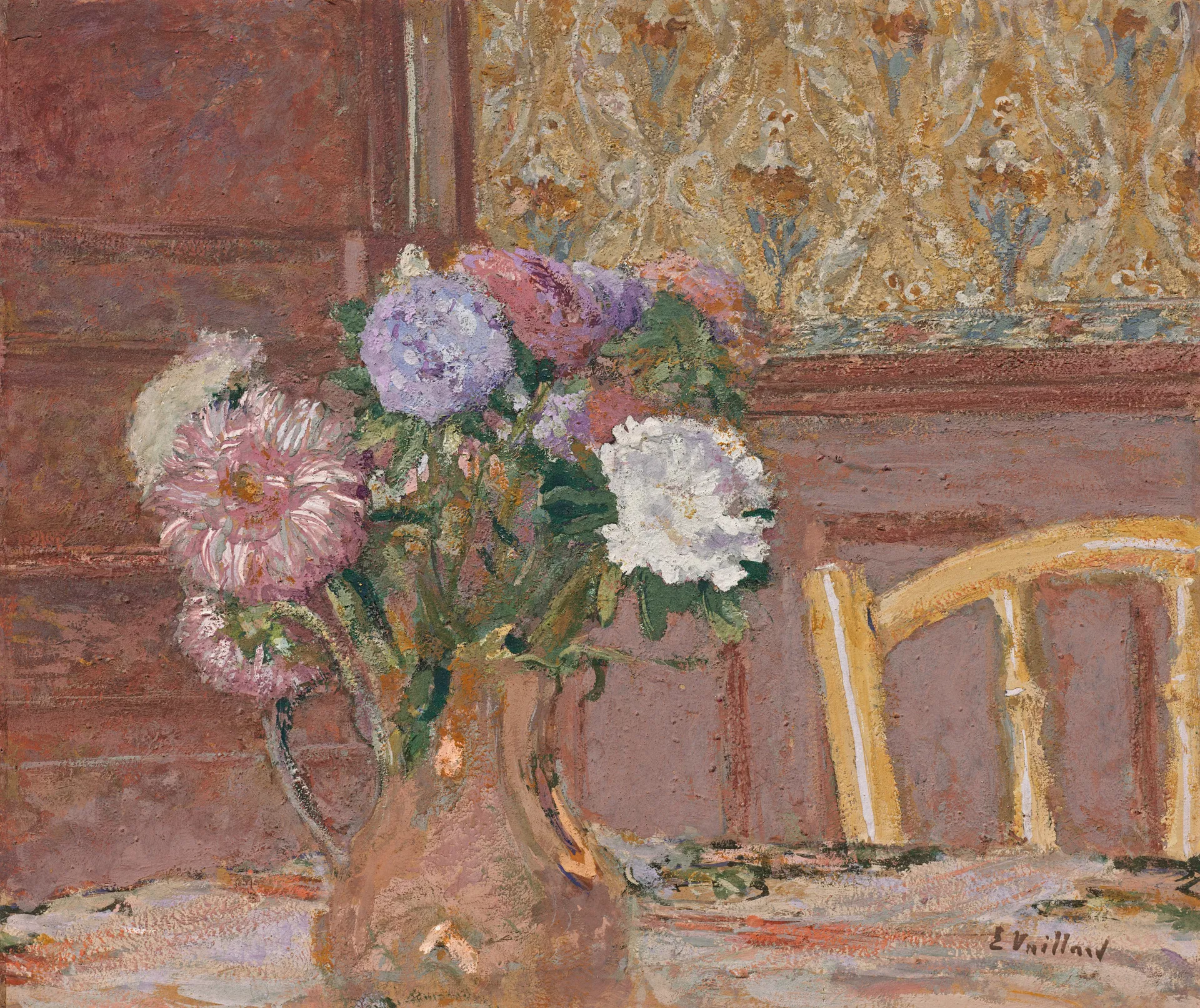
Edouard Vuillard Cuiseaux, 
Saône-et-Loire 1868 - 1940 
La Baule near Saint-Nazaire Les reines-marguerites
Mixed technique 14 1/4 x 16 1/2 in / 36.2 x 41.9 cm

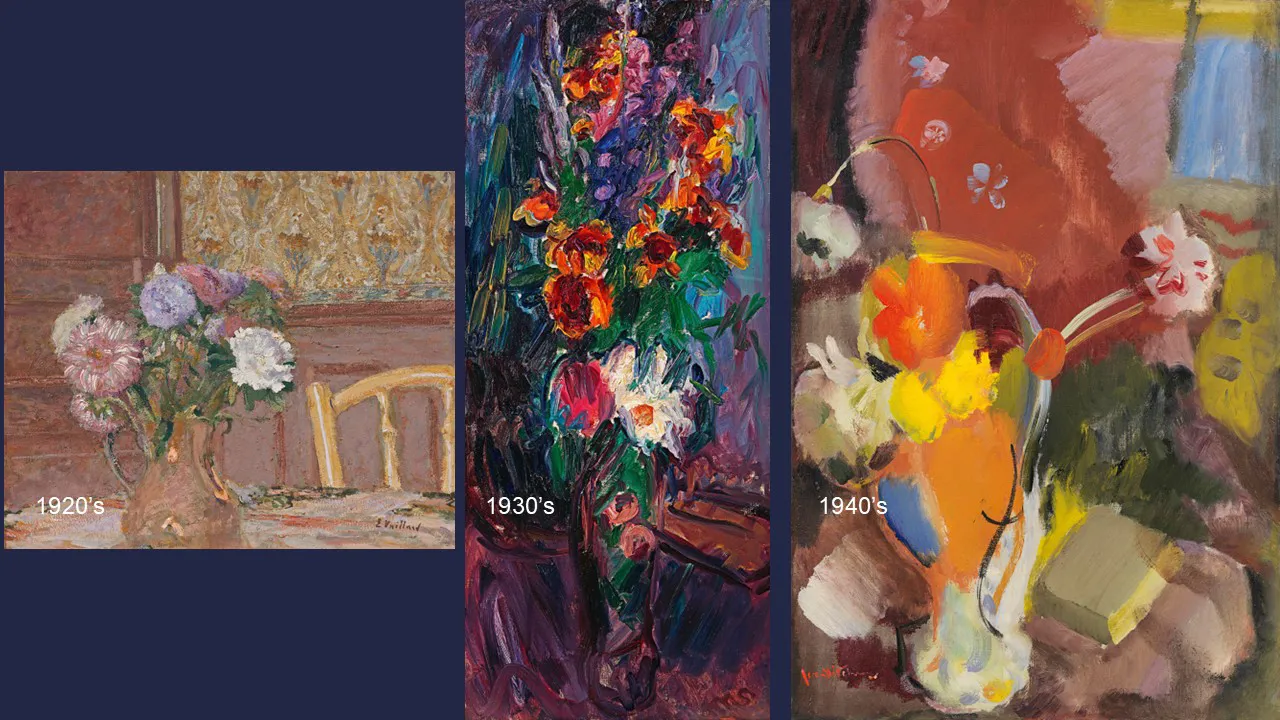
In the 1920s Vuillard rented the Closerie des Genêts at Vaucresson eight miles west of Paris, a prosperous, leafy town with picturesque villas. The Hessels took the Villa Anna next door, later buying the Clos Cézanne. Vuillard was by now one of the most prominent French portraitists of his day, embedded in a circle of artists, intellectuals and theatre folk. Apart from portrait commissions, he continued to delight in depicting the cluttered, cosy bourgeois interiors, often with family members, that had intrigued him from his youth. In the early 1920s he painted a number of views of rooms in the Closerie des Genêts seen from oblique angles, the play of walls and vistas to further rooms and distant windows showing an interest in complex depths of field. Vuillard’s elderly, widowed mother is a tranquil presence in many of these works, a black-clad, dignified matriarch who is rarely shown idle: knitting, writing or sewing. Equally important to the poise of such works are the modest vases of flowers on mantelpieces or the dining room table.
Exhibition content image
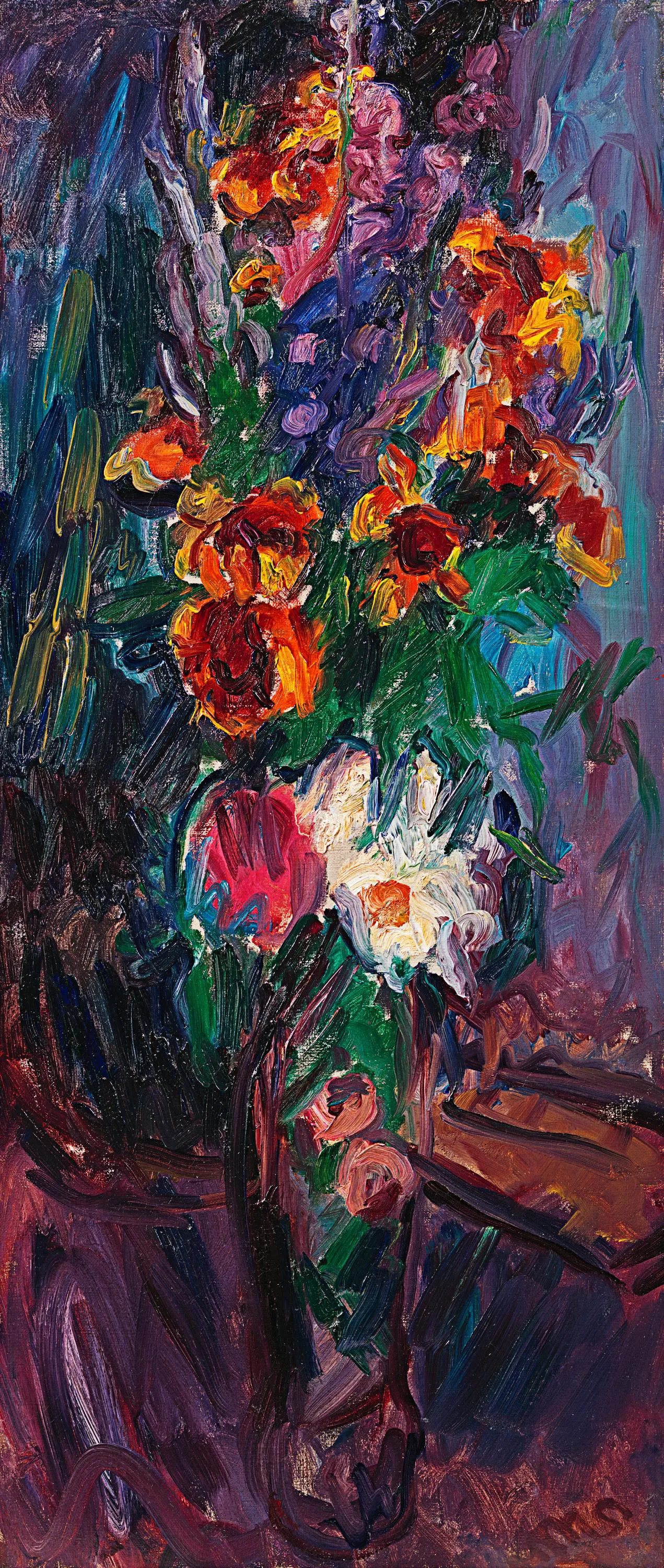
Sir Matthew Smith
Mixed flowers in a vase
Oil on canvas 28 x 12 in / 71.1 x 30.5 cm


Almost certainly painted in France in 1933, Mixed flowers in a vase shows a desire to experiment with its unusually long and narrow format canvas. Smith didn’t prepare his own canvasses, but almost invariably worked on artist colourmen’s ready-made ones, preferring the best quality linen supports. Whenever he was in France, he would stock up with quantities of canvasses of various proportions, rarely using the same dimensions twice. This work was painted at a highly productive period for Smith who was spending much of his time in France producing landscapes, nudes and still lifes. He had an established outlet for his work through his dealer, Arthur Tooth, who was giving the artist biennial solo shows. It is a settled period of confidence, growing fame and critical acclaim. Having established his own working idiom and premier coup method, he was enjoying great freedom of execution through this period. This painting exemplifies a particular freedom of facture in the slashed brush marks laid in very rapidly so that the paint and the form described are unified.


Exhibition content image
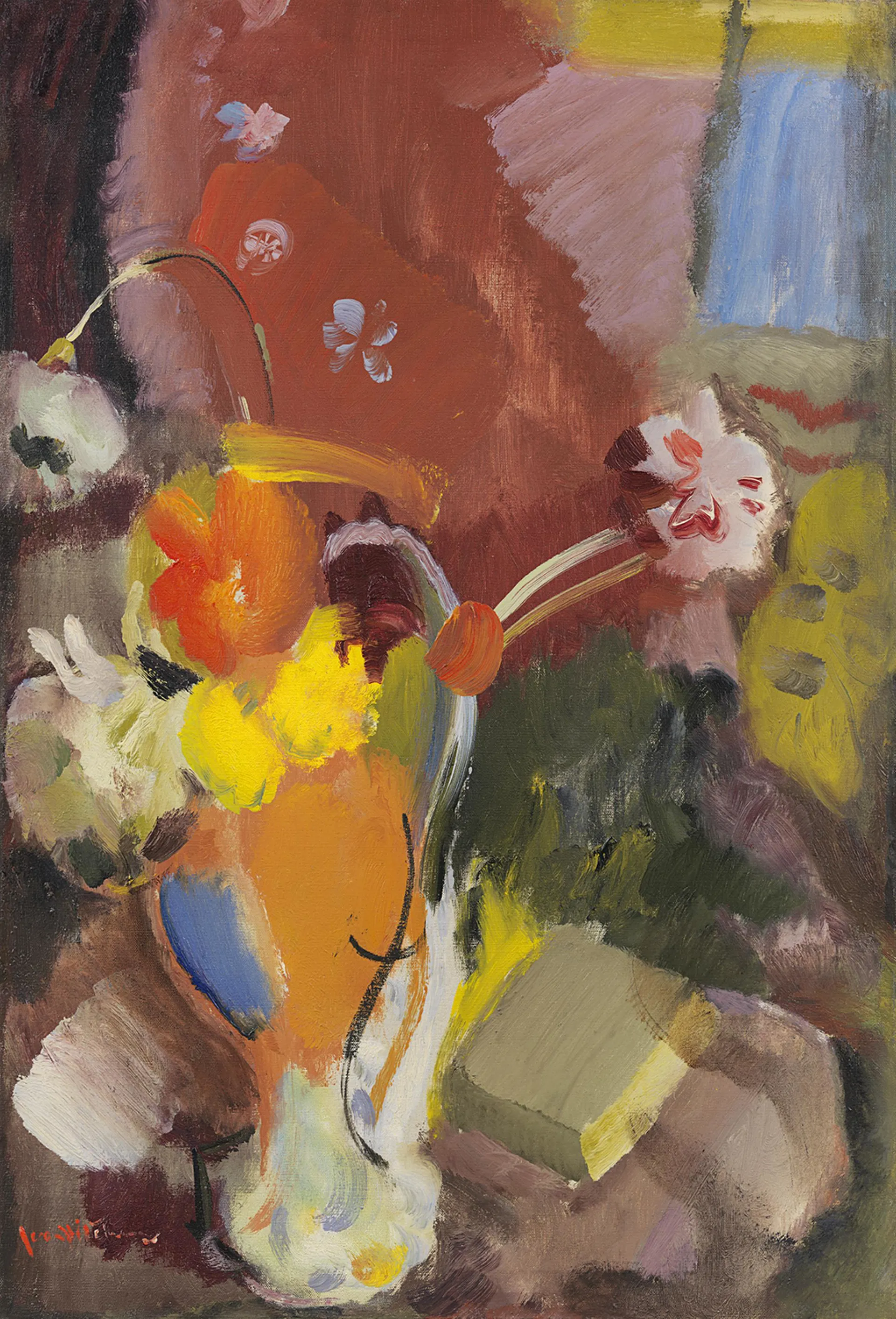
Ivon Hitchens
Flowers red & gold  
Oil on canvas 24 x 16 3/4 in / 61 x 42.5 cm
Painted in the early 1940s

Even if we didn’t have his word for it, we could easily believe that Ivon Hitchens loved painting flowers. Their living presence was a spur to two of his greatest gifts: an instinctive feel for colour and a bravura handling of the paintbrush. In this painting one immediately senses the charge of energy transmitted to the canvas from the painter’s hand—boldly brushed patches of colour contrasting with the most delicate touch to render the fluttering petals, the swirling decoration on the lower part of the jar and the writhing stalks that suggest the flowers are straining to escape captivity. The different elements combine in an expression of joy which is the hallmark of Hitchens as it was of Matisse, whom he admired so much that he had to be wary of his influence.

An unhandled error has occurred. Reload 🗙