
JOHN ATKINSON GRIMSHAW
1836 - Leeds - 1893
Ref: CD 184
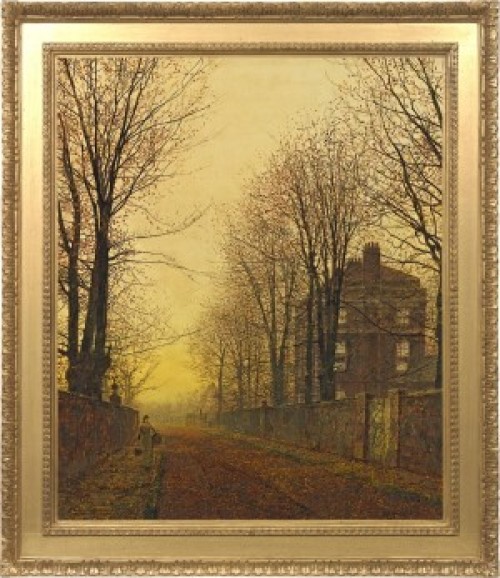
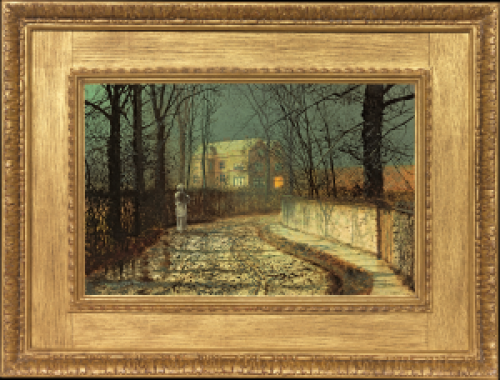
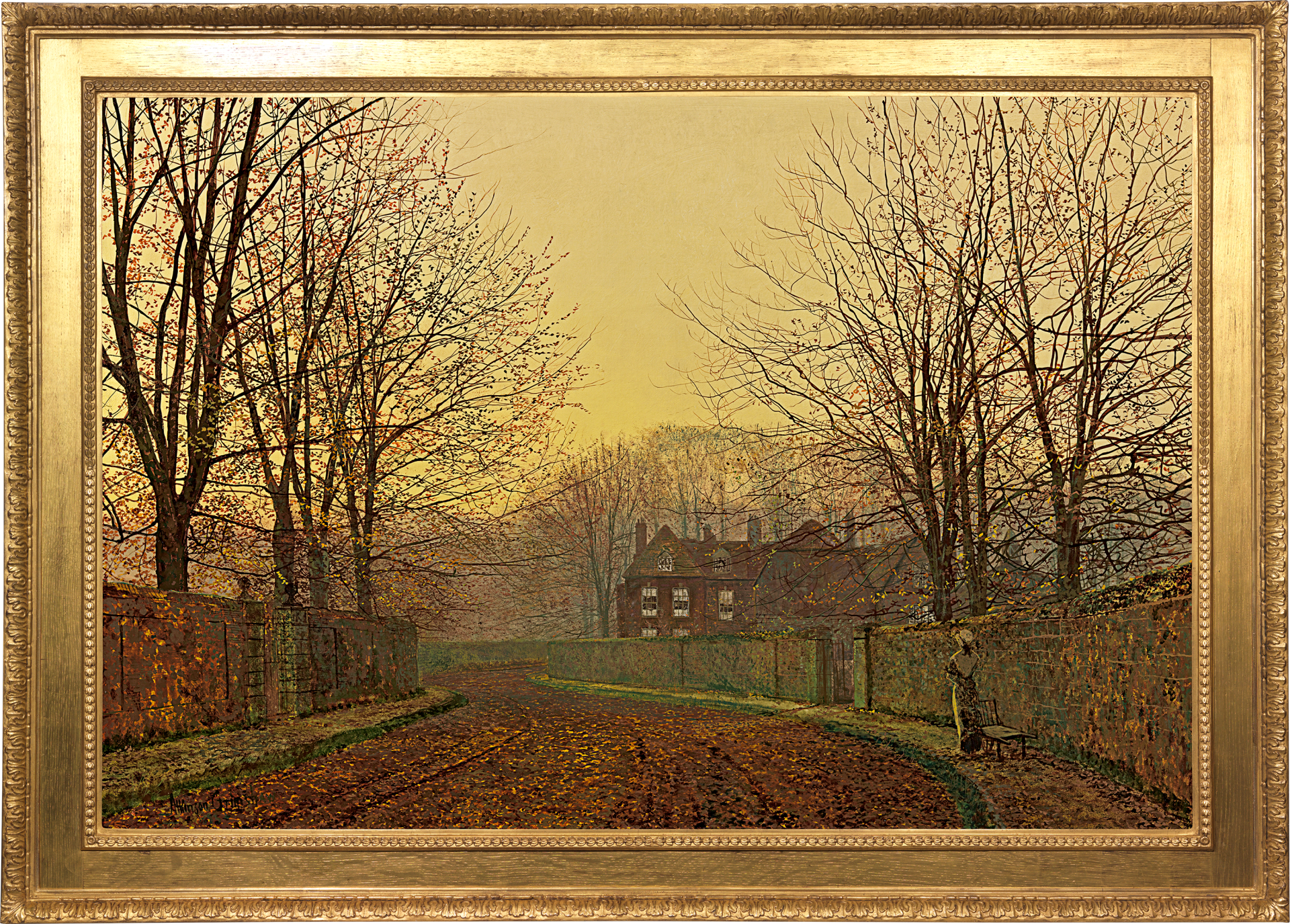
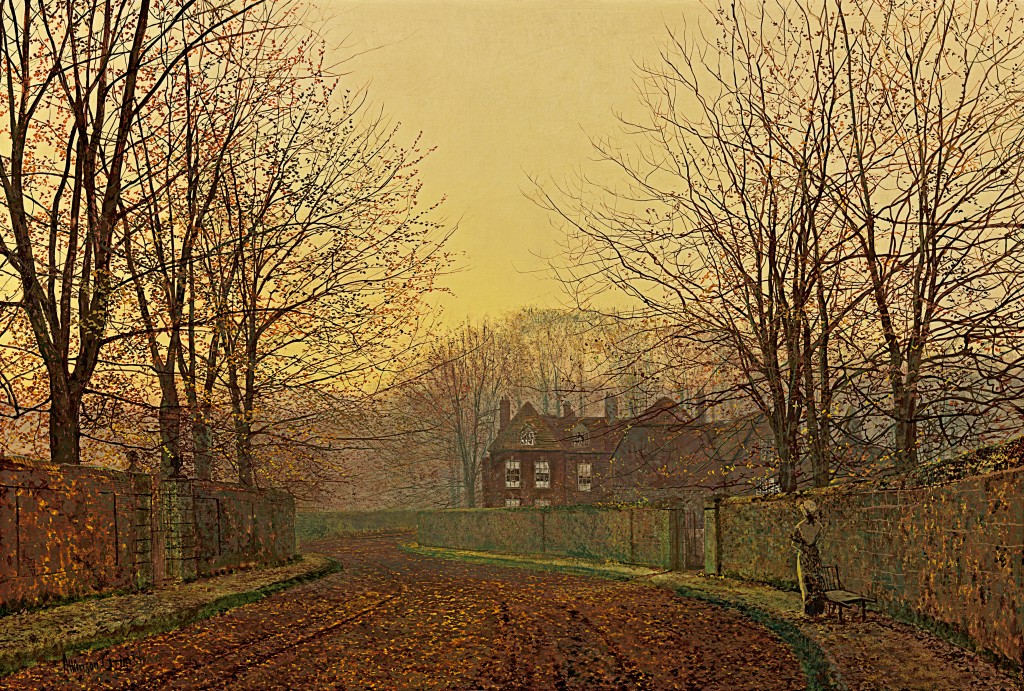
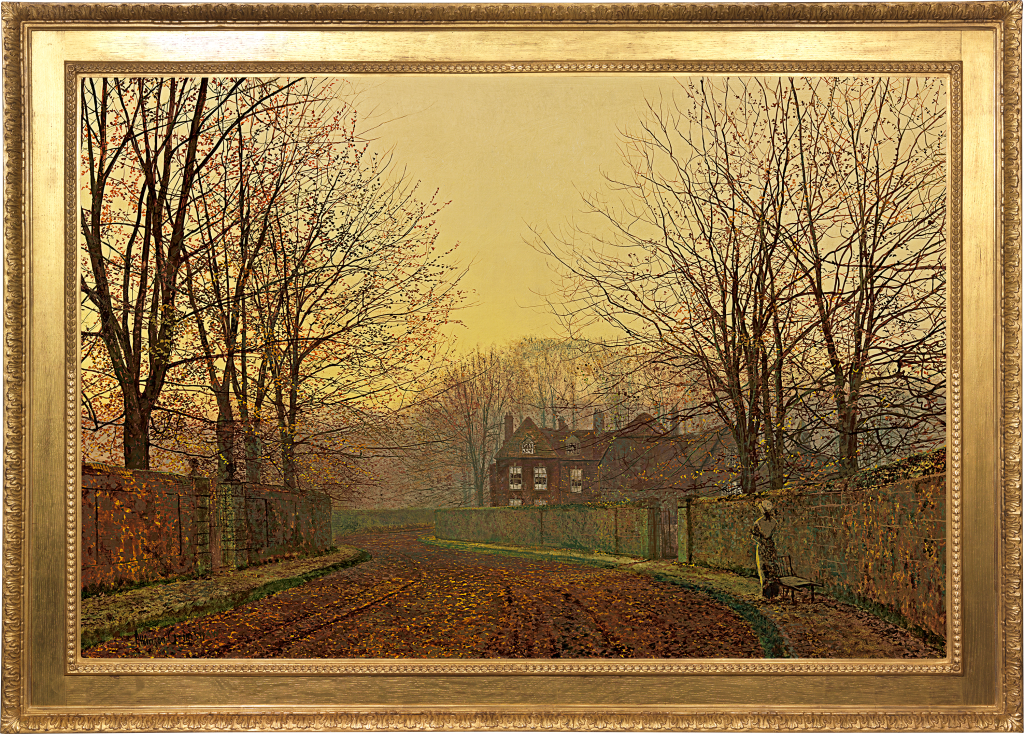
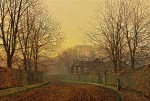
The glory of the year
Signed and dated lower left: Atkinson Grimshaw / 1883;
signed, dated and inscribed on the reverse: "The glory of the year" / Atkinson Grimshaw / 1883 +
Oil on canvas: 32 ¾ x 48 ¼ in / 83.2 x 122.6 cm
Frame size: 41 x 56 in / 104.1 x 142.2 cm
In a gilded Watts pattern style frame
Provenance:
John H Hodgson (b.1846), then by descent;
Arthur Jacob Hodgson (1860-1933) and Emily Meredith Hodgson (née Williams, 1860-1939), 1545 McGregor Avenue, Montreal, Quebec, then by descent to their daughter;
Emily Meredith Hodgson (1890-1975), then by descent to her cousin;
Esther M Hodgson Marshall (1901-1994), then by descent to her adoptive daughter;
Joan May Marshall, gifted in December 1974
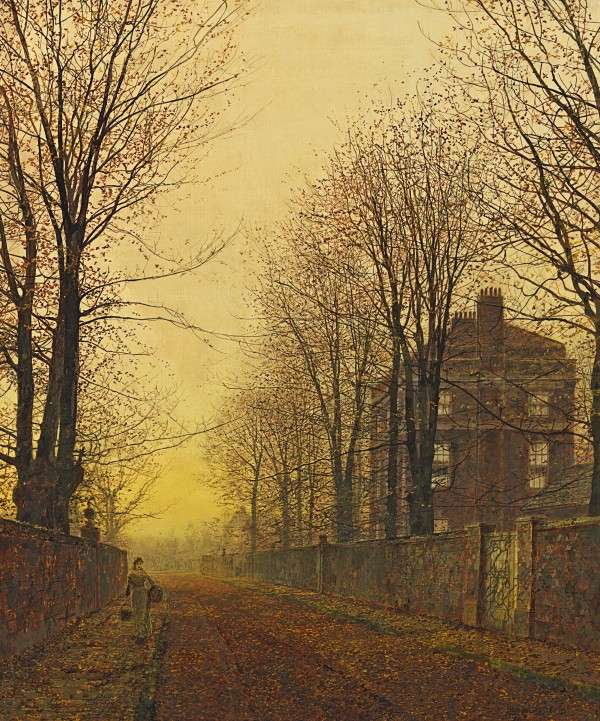
Redolent of autumn, Grimshaw’s golden lane scenes are greatly sought after, the pale, delicate tonality of the setting sun, superbly juxtaposed with the rich, russet warmth of his tree-lined streets strewn with fallen leaves. In these serene, nostalgic images, including paintings at the Yale Center for British Art and the Russell-Cotes Art Gallery & Museum, Grimshaw captures the beauty to be found in the fading light of the golden season. As in his early, Pre-Raphaelite works, Grimshaw takes delight in observing the details of nature away from industrial life, carefully revealing the elegant, tapering branches and gilded, furrowed ground. Calligraphic patterns of lichen and ivy which cover the walls, brilliantly reflect the exquisite tracery of the boughs above, while dappled tufts of grass and moss in the foreground follow the road into the distance and autumn’s waning glow. To further enhance the remembrance of days gone by, Grimshaw has included a figure in eighteenth century costume, a device used by many Victorian painters and novelists to evoke a happier, golden age.
The large mansion on the right, veiled by trees and the failing light, is likely to be based on Knostrop Old Hall. By 1870, Grimshaw had become successful enough to move into a home more suitable for an important local figure. He found his ideal residence at Knostrop Old Hall, a seventeenth century mansion about two miles from the centre of Leeds, which inspired the buildings in many of his paintings. This magnificent, mature work is painted in the same large-scale, panoramic format as Grimshaw’s Leeds Bridge, 1880 and Iris, 1886, both at Leeds Art Gallery.