

ELIAS VAN DEN BROECK
1650 - Amsterdam - 1708
Ref: CD 135
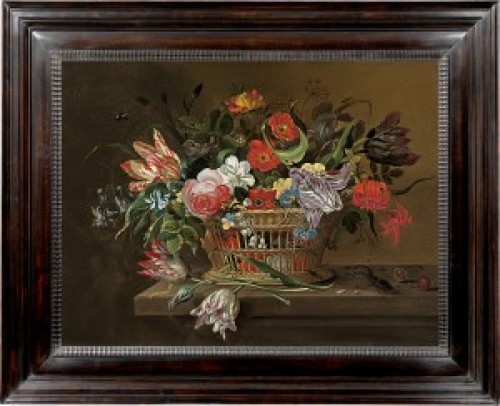
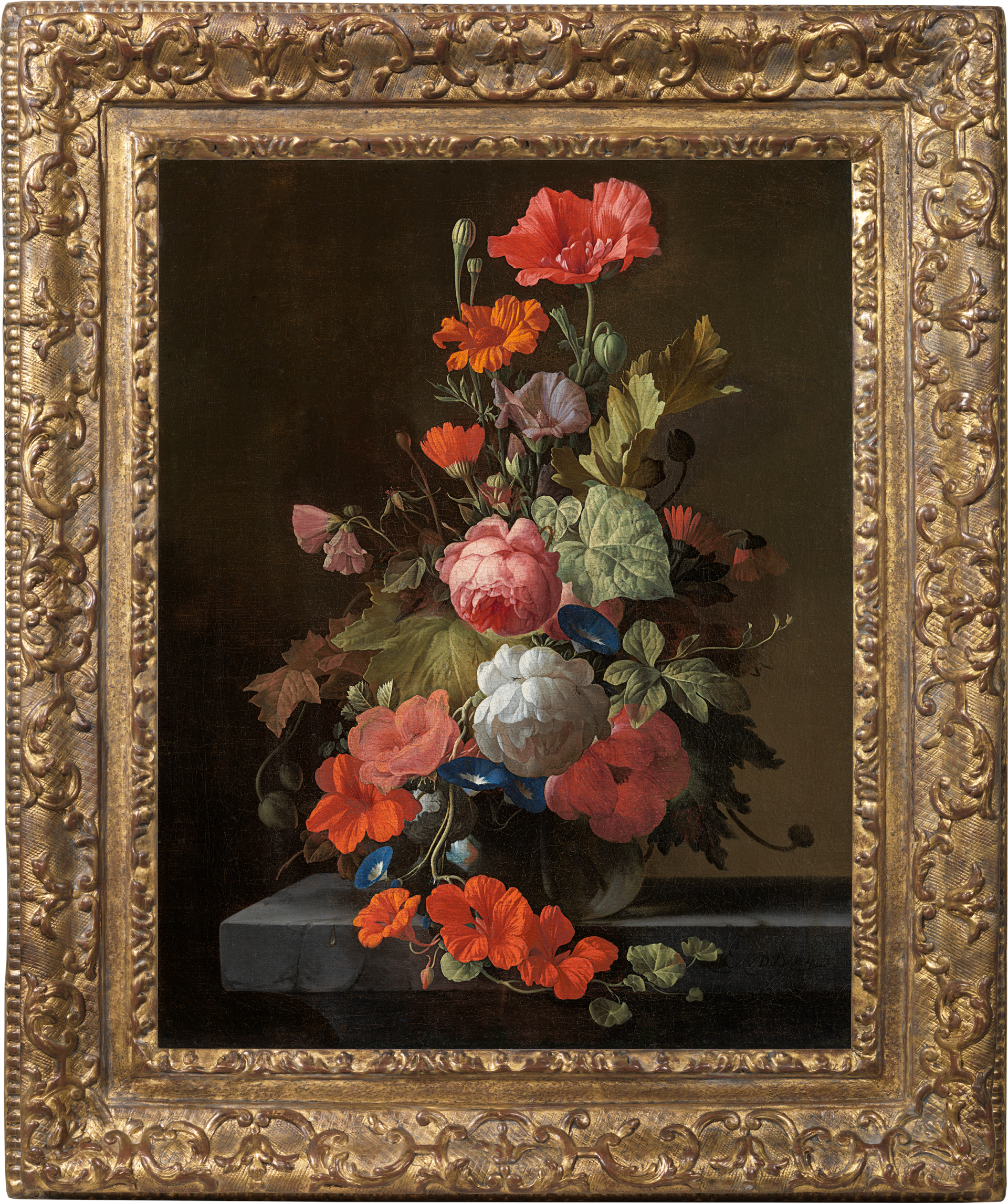
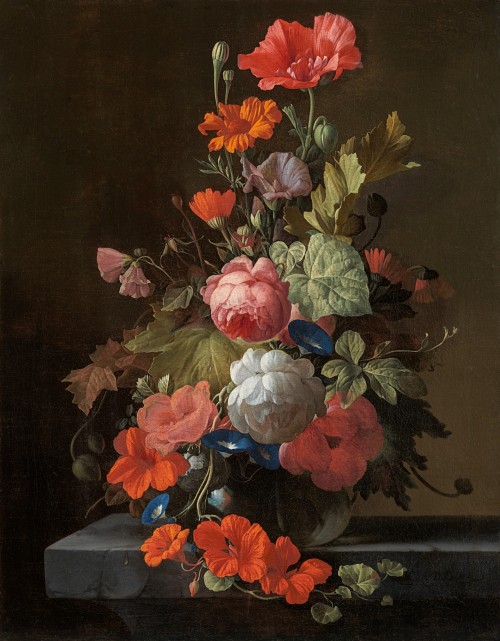
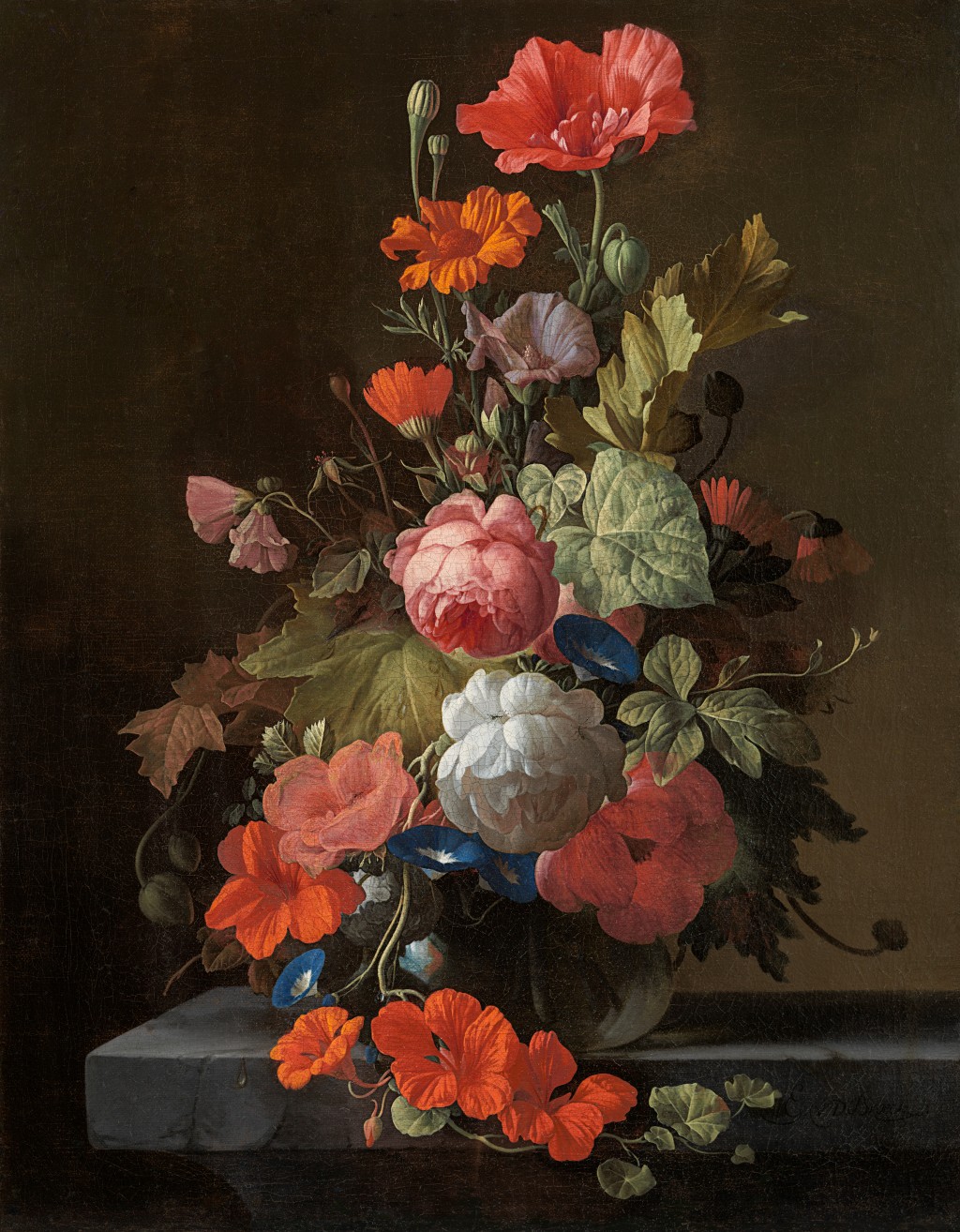
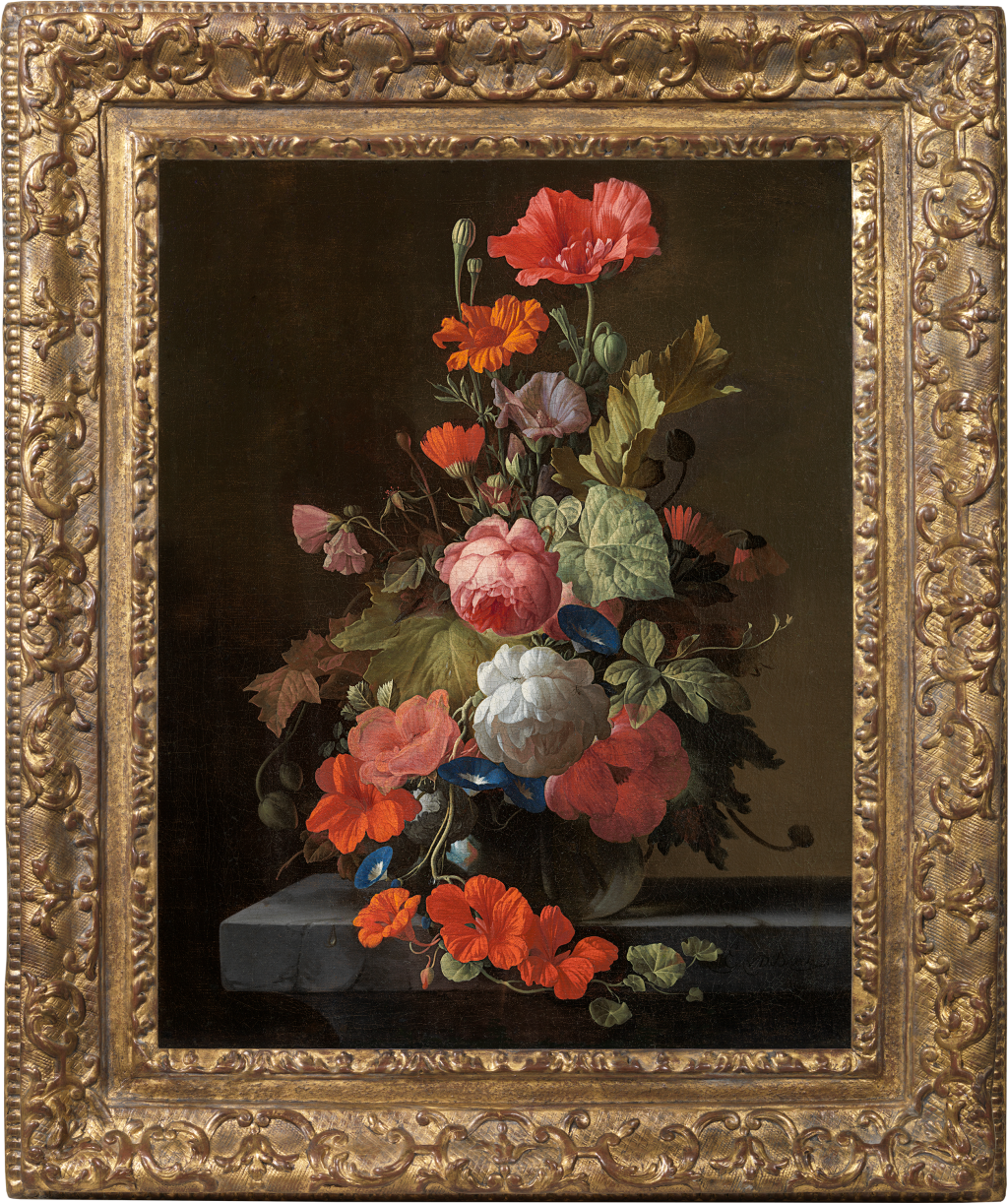
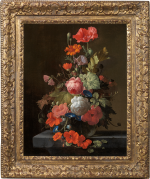
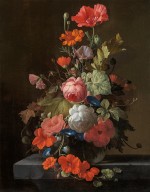
Still life of roses, poppies, morning glories, nasturtiums and other flowers with ants in a glass vase
Signed lower right: E.V.D. Broeck
Oil on canvas: 25 x 19 ½ in / 63.5 x 49.5 cm
Painted circa 1675
Provenance:
Count Joachim Ludwig Moltke (1857–1943), Denmark;
his posthumous sale, Winkel & Magnussen, Copenhagen, 18th April 1944, lot 8;
Carl Christian Brønnum Scavenius (b.1946), Klintholm Manor, Denmark, circa 1960;
James Hamilton, 5th Duke of Abercorn (b.1934);
by whom sold anonymously (‘The Property of a European Nobleman’), Christie’s London, 2nd December 1983, lot 57;
LR Bradbury;
by whom sold anonymously Christie’s London, 4th December 1984, lot 2;
Johnny van Haeften, London, 1985;
from whom acquired by a private collector, The Netherlands;
Sotheby’s London, 5th April 2023, lot 24
Exhibited:
Maastricht, Pictura Fine Art Fair, 23rd-31st March 1985, illus. in colour in the catalogue (on the stand of Johnny van Haeften)
Elias van den Broeck was born in Antwerp, but at an early age moved with his parents to Amsterdam, where he was initially apprenticed to a goldsmith in 1665. In the same year, however, he became a pupil of the still-life painter Cornelis Kick, with whom he remained until 1669. Subsequently he trained under Jan Davidsz. de Heem at Utrecht and apparently followed de Heem when he returned to Antwerp in 1672. In 1673 van den Broeck became a member of the guild there, but in 1685 returned to Amsterdam, where he worked until his death. The artists’ biographer Weyerman has it that van den Broeck had been forced to leave Antwerp because of the indignation he had caused by pasting real butterflies onto his pictures rather than painting them. During his painting career of some forty years, Elias van den Broeck produced a variety of still lifes of flowers, fruit and of nature pieces. Although there is certainly a reminiscence in his work of the still lifes of both of his teachers, van den Broeck’s paintings are marked by a strong individuality which is easily recognisable.
Van den Broeck favoured tall, slender arrangements in his upright paintings. This bouquet describes a serpentine line from the poppy at top right to the flamboyant trail of nasturtiums which curls round at the base of the composition. Van den Broeck liked to choose blooms of strong orange-red, interspersed with cool colours such as the white rose and blue morning glory in this work. As in the paintings of Jan Davidsz. de Heem, the flowers emerge with sculptural solidity from a dark background, with the topmost, central and lowest blooms most strongly lit. The marigolds and nasturtium (an edible plant also known as Indian cress) had been brought to Europe from the Americas by the Spanish in the sixteenth century, while the roses were long established species in Netherlandish gardens.